 |
|||
The Apostle Paul’s Letters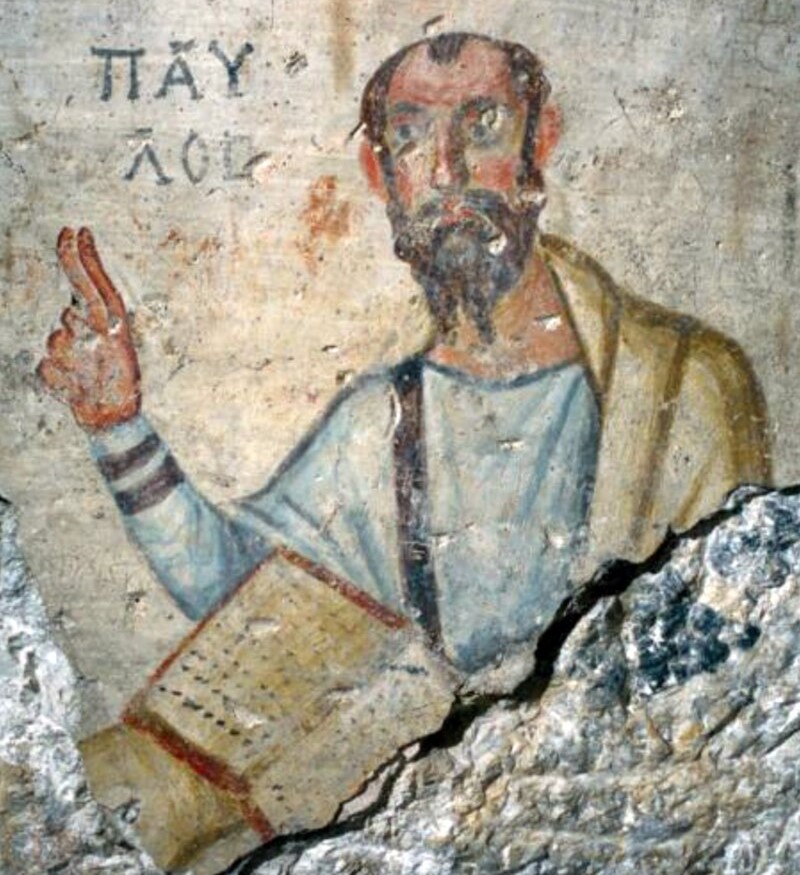
✦ There are seven letters in the Christian New Testament that most scholars believe were written by the Apostle Paul:
(1) There are 45 important commonalities with Paul’s seven letters (see the list of 45 below after this list of 10). (2) The purpose of baptism is more primitive in the Gospels - cleansing the soul of sin. Whereas the Pauline letters suggest it represents burial and resurrection in Christ (Romans 6:3-5). If the Gospels were later, surely there would be some mention of the more elaborate meaning in Paul’s letters, a tempting motivation to use baptism as a type of prophecy of the death and resurrection of Jesus. But there is no hint of this in the Gospels. (3) Paul’s seven letters strongly emphasize that the Mosaic Law is no longer applicable. The Synoptics hint at this, but also show conflict (see the list of differences below, after the list of 45 commonalities), which suggests an early doctrine compared to an outright rejection of the Law in Paul’s letters. (4) In the Synoptics, Jesus is critical of leaders and authority of the Jewish religious orders (chief priests, scribes, keepers of the Mosaic Law). This is an early motif of the movement. Paul’s letters place blame for Jesus’ death squarely on the Jews (1 Thessalonians 2:14-15), which is similar to the later Gospel of John, which expanded animosity to the Jews in general. (5) In the Synoptics, Jesus is referred to as a human-form Son of God, but the Synoptics do not imply he is God, or equal to God. The concept that a man can be a son of God exists in the Hebrew Bible (2 Samuel 7:14, Psalm 2:7 89:26-27), but this did not make the person divine. The Messiah (or Christ in Greek) is also not meant to be divine in the Hebrew Bible. The concept of divinity for a human son of a god was strictly pagan (and Greco-Roman). The Synoptics clearly describe Jesus as a separate, independent entity with independent thoughts and lack of awareness of God’s thoughts (Mark 10:18 14:36 15:34, Matt 4:10 19:17 24:36-37 26:39 42 27:46, Luke 4:8 18:19 22:42). This seems to be an earlier motif compared to Paul’s letters which puts Jesus equal to God (Philippians 2:6). There is a natural progression from a more primitive theology in the Synoptics, to Paul equating Jesus with God, and eventually to the higher developed theology in the later Gospel of John (1:14 5:18 8:58 10:30). Introducing the idea that Jesus was equal to God (or assigning divinity to a Jewish messiah or divinity to a Hebrew-Bible-concept son of God), must have introduced extreme conflict and obvious contradictions with earlier texts describing Jesus as a separate entity. It is very interesting that Jesus’ comment, “Why do you call me good? No one is good by God alone.” (Mark 10:18, Matt 19:17, Luke 18:19) is completely missing from the Gospel of John. In fact, all the separateness verses in the Synoptics noted above are missing from the Gospel of John, including Jesus’ confusing question from the cross, “Why have you forsaken me?” (6) The Gospels include people that existed before Paul (Pontius Pilate, Caiaphas, Antipas), while James, the brother of Jesus, is only mentioned as a side note. In Paul’s letters, James is a very important figure in the Jesus movement in Jerusalem. If the core text of the Gospels would have been written after Paul, then the Gospels would have surely had more mention of James, and at least that Jesus appeared live after the crucifixion to his own brother. 1 Corinthians 15:5-8 lists an important chronology of who Jesus appeared to, first the twelve apostles (15:5), then a multitude (15:6), then James (15:7), and then Paul (15:8). One could infer that the core of the Synoptics was written soon after Jesus’ appearance to the eleven disciples, but before the later appearances chronicled by Paul. (7) Furthering Point (6), Paul never mentions that Jesus appeared live to Mary Magdaline. The later Gospel of John is the only Gospel to state that Jesus first appeared to Mary Magdaline (ignoring the controversial alternate ending of Mark [verses 16:9-20], which many scholars believe was added centuries later). This further demonstrates consistency between Paul’s letters and the Synoptics, and a further inference that John was written after Paul. (8) The Synoptic Gospels offer conflicting messages regarding whether Jesus’ teachings should be spread to the Gentiles, which appears to be an early stance compared to Paul’s letters. If the core of the Synoptics were written after Paul’s letters, they should have incorporated a more uniform message regarding applicability towards Gentiles. The Gospel of Mark (perhaps closest to the core text - again, ignoring the controversial alternate ending) ignores the issue completely, as if it was not an issue thought of yet. Then Matthew 4:14-16 seems to be the first to address this by hinting Gentiles maybe more acceptant of Jesus’ teachings. But then Matthew 10:5 goes on to say, “Go nowhere among the Gentiles.” Matthew 28:19 and Luke 24:47 appear to be tacked on endings (similar to Mark 16:9-20) instructing to preach to all nations. (9) Matthew 24:14, Mark 13:10, and Luke 21:25-33 present a messianic view of Jesus’ proposed Second Coming that is more in line with Jewish views expressed in the Hebrew Bible. Again, recall in Point (5) above that the Synoptics are not necessarily equating the messiah as a divine figure. (10) The Synoptic Gospels accounts of the Lord’s Supper (Matthew 26:17-28, Mark 14:18-23, and Luke 22:8-19) are more primitive than Paul’s account (1 Corinthians 11:23-26). Paul is reciting a known, practiced ritual (do in remembrance), while the Synoptics are narrating a real-time, passover meal (at a table, eating, drinking). Matthew and Mark quote Jesus stating the cup is his “blood of the covenant,” a clear reference to the existing Hebrew Bible Passover Covenant - a Jewish covenant. Paul changes this to “new covenant” associated with the Christian movement. The earliest versions of Luke leave out any reference to “covenant”, but much-later scribal changes (Luke 22:20-21) add the expression “Do this in remembrance” and “new covenant.” ✦ Paul’s letters have several commonalities with concepts/events documented in the Canonical Gospels, suggesting that some form of Christian doctrine existed before Paul’s conversion. It is not known whether Christian doctrine existed as word-of-mouth, various written documents (i.e., “Q” or “M” versions of the Gospels), or some combination thereof. Of course, there was likely multiple versions of the Jesus movement circulating during this time. Did Paul invent these concepts, or were they associated with an existing version of the Jesus movement that Paul preferred? One should consider each of the 45 individual commonalities listed below, as well as the two major differences listed below after the 45, and their context: (1) Refers to Jesus as the Christ (284 times in Paul’s letters, 62 times in the Gospels) (2) Use of the Greek term evangelion (meaning “good news” or gospel, 62 times in Paul’s letters, 17 times in the Synoptic Gospels, 0 times in the Gospel of John). Note the term evangelion was used in Greek and Roman culture prior to Christianity to announce the good news of victory in battle, or the birth of a new heir to a throne. (3) The gospel was first to the Jews in Judea (Romans 1:16 15:19, Galatians 1:17, Matthew 3:5 4:25, Mark 1:5 3:7, Luke 3:1 5:17, John 3:22 4:47) (4) Baptism (mentioned 14 times in Paul’s letters and 70 times in the Gospels) (5) Use of the expression “kingdom of God” (7 times in Paul’s letters, 5 times in Matthew, 15 times in Mark, 33 times in Luke, and 2 times in John. Matthew also uses a slightly different “kingdom of heaven” 32 times. In the Old Testament the term “kingdom” is mostly associated with earthly kings. However, Psalms 45:6 103:19 145:11-13 appear to be associated with the idea of a heavenly kingdom) (6) Jesus, the Son of God (16 times in Paul’s letters, 61 times in the Gospels) (7) Jesus, a descendant of David (Romans 1:3, 19 times in the Synoptics, John 7:42) (8) Unique phrase of “Deliver us from evil” (Galatians 1:4, Matthew 6:13, Luke 11:4) (9) Twelve apostles (1 Corinthians 15:5, Matthew 10:1-2 8, Mark 3:14, Luke 6:13 22:14) (10) Peter as an apostle (Galatians 1:18 2:7 8 11 14, 97 times in the Gospels) (11) John as an apostle (Galatians 2:9, many times in the Gospels) (12) Cephas as another name for Peter (1 Corinthians 1:12 3:22 9:5 15:5, Galatians 2:9, John 1:42) (13) James as Jesus’ brother (Galatians 1:19, Matthew 13:55, Mark 6:3) (14) Bless them who persecute you (Romans 12:14, Matthew 5:44, Luke 6:28) (15) Amiable towards enemies (Romans 12:20, Matthew 5:44, Luke 6:27 35) (16) The Lord’s Supper on the same night he was betrayed (1 Corinthians 11:20-23, Matthew 26:21-25, Mark 14:18, Luke 22:21, John 13:2) (17) Drinking the cup, the blood of Christ, breaking the bread, eating the body of Christ (1 Corinthians 10:16-17 11:20-27, Matthew 26:26-28, Mark 14:22-24, Luke 22:17-19) (18) Jesus was crucified (7 times in Paul’s letters, Matthew 27:35, Mark 15:24, Luke 23:33, John 19:23) (19) Jesus’ crucifixion associated with Passover (1 Corinthians 5:7, Matthew 26:2 17-19, Mark 14:1 12-16, Luke 22:1 7-15, John 18:28 39 19:14) (20) Jesus was buried (1 Corinthians 15:4, Romans 6:4, Matthew 27:60, Mark 15:46, Luke 23:53, John 19:40-42) (21) Jesus died for our sins (1 Corinthians 15:3 17, Romans 4:25 5:6-8 6:6-10, 1 Thessalonians 5:10, Matthew 1:21 26:28, Luke 1:77 24:47, John 1:29 8:21) (22) Jesus raised from death (21 times in Paul’s letters, Matthew 16:21 17:23, Luke 9:22) (23) Jesus raised from death on the third day (1 Corinthians 15:4, Matthew 16:21 17:23 20:19, Mark 9:31 10:34, Luke 9:22 18:33 24:7 46) (24) Jesus appeared live after the crucifixion (1 Corinthians 15:5 (Peter and the twelve), 15:6 (500), 15:7 (James), 9:1 15:8 (Paul), Matthew 28:16-17 (eleven in Galilee), Mark 16:7 (to be seen by eleven in Galilee), Luke 24:15-31 (Cleopas and a companion), 24:34 (Simon Peter), 24:33-43 (eleven disciples), John 20:14 (Mary Magdalene), 20:19 (ten disciples), 20:26 (ten disciples plus Thomas), 21:2 (five disciples again)) (25) Commissioned the disciples to heal the sick and cast out demons (Galatians 3:5, 1 Corinthians 12:9-10 28 29, 2 Corinthians 12:12, Romans 15:19, Matthew 10:1 8, Mark 3:15 6:7 13, Luke 9:1-2 6 10:9) (26) Negative view towards Mosaic Law and the expressed end of its applicability (Romans 3:1 21 28 4:13-15 6:15 7:6 9:32 10:4, 1 Corinthians 7:17-21 9:21, Galatians 2:16 19 21 3:1 5 10-13 5:4 18, Matthew 9:16-17, 11:13,Mark 2:21-22, Luke 5:33-39 11:46-47 52 16:16) (27) The Hebrew Bible uses the phrase “spirit of God” more than 50 times, and references to “My, His, or Thy spirit” at least another 30 times. There are two references to “His holy spirit” (Isaiah 63:10-11). However, there is a curious verse in First Chronicles 12:19 (Hebrew Bible) (12:18 in the Christian Old Testament) that states “the spirit clothed Amasai,” which supposedly means God influenced Amasai. There is another verse, 28:12, that explains plans King David had by “the spirit” for Solomon’s Temple, but this could be a reference to King David’s imagination, rather a reference to some form of God. There are numerous entries in Paul’s letters and the Gospels for “the Spirit of God” or “His Spirit.” However, this commonality is ignored since this was also common in the Hebrew Bible. Entries that leave off “of God”, or simply “the Spirit” are unique. This occurs 44 times in Paul’s letters (Romans 8:4 5 9 10 13 16 23 26 27 15:30, 1 Corinthians 2:4 10 12:4 7 8 9 11 13, 2 Corinthians 1:22 5:5, Galatians 3:2 3 5 14 4:6 29 5:5 16 17 18 22 25 6:8, Philippians 1:19 2:1, 1 Thessalonians 5:19) and 15 times in the Gospels (Matthew 4:1, Mark 1:10 12, Luke 2:27 4:14, John 1:32 33 3:5 6 8 34 7:39 14:17 15:26 16:13). “The Holy Spirit” and “the Holy Ghost” are also unique. These occur 13 times in Paul’s letters (Romans 5:5 9:1 14:17 15:13 16 19, 1 Corinthians 2:13 6:19 12:3, 2 Corinthians 6:6 13:13, 1 Thessalonians 1:5-6) and 26 time in the Gospels (Matthew 1:18 20 3:11 12:31-32 28:19, Mark 1:8 3:29 12:36 13:11, Luke 1:15 35 41 67 2:25-26 3:16 22 4:1 11:13 12:10 12, John 1:33 7:39 14:26 20:22). (28) Law summed up as “Love thy neighbor as thyself” (Romans 13:8-9, Galatians 5:14, Matthew 22:39, Mark 12:31, Luke 10:27). (29) References to love, joy, peace, gentleness, goodness, faith, meekness, temperance (many times in Paul’s letters and the Gospels) (30) Marks of the Lord Jesus (Galatians 6:17, Matthew 20:19 27:26, Mark 10:34 15:15, Luke 18:33, John 19:1) (31) The wrath to come (Romans 5:9, 1 Thessalonians 1:10 2:16 5:9, Matthew 3:7, Luke 3:7) (32) A blanket assignment of blame on the Jews for the death of Jesus (1 Thessalonians 2:14-15, Matthew 16:21 26:4 27:25, Mark 8:31 10:34 22:2, John 5:18 7:1 19 20 25 8:37 40) (33) Jews killed the prophets (Romans 11:3, 1 Thessalonians 2:14-15, Matthew 23:31 34 37, Luke 11:47-48 13:34) (34) Second coming of Jesus (1 Corinthians 1:7 4:5 11:26 15:23, 1 Thessalonians 2:19 3:13 4:15 5:2 23, Matthew 24:3 27 30 37 39 26:64, Mark 13:26 14:62, Luke 21:27) (35) Jesus will come again like a thief in the night. Paul indicates this is an expression that the Thessalonians should know well. (1 Thessalonians 5:2, Matthew 24:43) (36) Time of Jesus’ second coming is very near (Romans 13:11 16:20, 1 Corinthians 7:29, Philippians 4:5, Matthew 16:28 24:34, Mark 9:1 13:30, Luke 21:32) (37) Satan tempting or controlling people. The Hebrew Bible states Satan made life difficult for Job but did not tempt Job. (1 Corinthians 5:5 7:5, 2 Corinthians 2:11, 1 Thessalonians 2:18, Matthew 4:1-9 16:23, Mark 1:13 8:33, Luke 4:2-13 22:3 31, John 13:27) (38) Faith to move mountains (1 Corinthians 13:2, Matthew 17:20 21:21, Mark 11:23) (39) Flesh versus spirit (Romans 8:1-12, Galatians 5:19-27, Matthew 26:41, Mark 14:38, John 3:6, 6:62) (40) Immortality, eternal life (Romans 2:7 5:21 6:23, Galatians 6:8, 1 Thessalonians 4:17, Matthew 19:16 25:46, Mark 10:17 30, Luke 10:25 18:17, John 3:15 4:36 5:39 6:54 68 10:28 12:25 17:2-3) (41) Jesus at the right hand of God (Romans 8:34, Matthew 26:64, Mark 14:62, Luke 22:69) (42) Christ will judge men (Romans 2:16 14:10, 1 Corinthians 4:4, 2 Corinthians 5:10, Matthew 19:28, Luke 22:30, John 5:22 27 9:39 12:48) (43) Christ believers will rise from their graves on the last day (1 Corinthians 15:52, 1 Thessalonians 4:16, Mark 12:23 25, Luke 20:35, John 5:25-29 6:44-54 11:23-24) (44) Believers are “saved” (Romans 10:9 13, 1 Corinthians 1:21 15:2, Matthew 1:21 10:22 18:11 19:25 24:13 27:42, Mark 8:35 10:26 13:13 15:31 16:16, Luke 7:50 8:12 9:24 9:56 13:23 18:26 18:42 19:10 23:35, John 3:17 5:34 10:9 12:47) (45) Shine as lights in the world (Philippians 2:15, 2 Corinthians 4:4 6, Matthew 5:14 16, John 8:12 9:5) ✦ Major differences: (1) The Synoptics show conflict regarding applicability of the Mosaic Law. Matthew 11:13 and Luke 16:16 state the law and the prophets were until John the Baptist, which implies they are no longer applicable. The Gospel parables of a new patch on old clothing, and new wine into old wineskins (Matthew 9:16-17, Mark 2:21-22, Luke 5:36-38) seems to be a rebuke of the law. Each of these is consistent with Paul’s letters. However, Matthew 5:17-18 says Jesus did not come to destroy the law, but to fulfill it. (2) The Synoptics show conflict regarding applicability of Jesus’ teachings for Gentiles (For: Matthew 4:14-16 28:19, Luke 24:47, Against: Matthew 10:5, Mark ignores the issue). Paul’s letters stress complete applicability for Gentiles. ✦ It is likely Paul wrote about existing Christian doctrine he preferred and pushed for acceptance to recipients of the letters. Some scholars feel Paul was instrumental, if not central, in the spread of early Christianity. However, it is possible Paul is remembered because he was prolific in writing letters and writing well. This does not mean he was the single or even primary force behind the spread of early Christianity. Paul even documents in his letter to the Romans (c. 56 CE) that it had reached Rome without his ever having visited. ✦ There are interesting Gospel passages where Jesus says the temple (i.e., his body) will be destroyed and rebuilt in three days (Matthew 26:61 27:40, Mark 14:58 15:29, John 2:19). Paul makes the statement, “Your body is a temple” three times in his letters (1 Corinthians 3:16-17 6:19, 2 Corinthians 6:16). This is a unique and interesting concept that is not present in the Hebrew Bible. The idea that your body is a temple in Paul’s letters predates the destruction of the temple in Jerusalem in 70 CE. Did Paul introduce this concept or was he reciting an existing idea? The destruction of the first temple in 586 BCE by Nebuchadnezzar and the rebuilding of the Second Temple in 515 BCE was no doubt a prominent subject of conversation amongst Jews during the time of Jesus. The Second Temple was a domineering presence during Jesus’ ministries, crucifixion, and supposed resurrection. It is conceivable that early Christians equated the perceived death and resurrection of Jesus to this famous incident in Jewish history. The “prophecy” of rebuilding the Second Temple after its destruction in 70 CE does not relate since it was never rebuilt. Then there are the Gospel passages that specifically refer to the “prophesized” “physical” destruction of the Second Temple (Matthew 24:2, Mark 13:2, Luke 21:6 24) which are distinct from the “temple equals body” idea and were most certainly added after 70 CE. ✦ If the commonalities mentioned above were existing concepts of a version of Christianity that Paul preferred, it suggests a remarkably developed Christian movement within two decades of Jesus’ crucifixion. This level of sophistication and consistency with the Synoptics seems almost impossible for a word-of-mouth basis only. |
|||
 |
|||