 |
|||
Flavius Josephus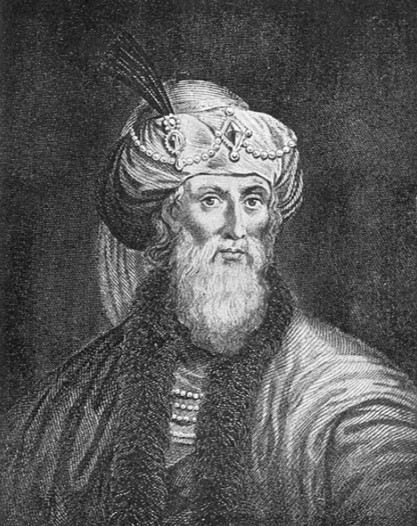
✦ Flavius Josephus (37 CE - 100 CE) was a Jewish rebel general during the First Jewish Revolt (66 - 70 CE) who was captured by Roman General Vespasian. Josephus turned traitor and became a confidant of General Vespasian (soon to become Emperor Vespasian). Josephus wrote several very important works documenting the history of the Jews, and their war with Rome. One such volumous work, entitled The Antiquities of the Jews included references to a few New Testament figures and events. ✦ Antiquities, 18.5 collaborates the New Testament events regarding the execution of John the Baptist (a righteous man) by Herod Antipas after he married his brother, Philip’s, wife, Herodias. Antiquities, 18.5 mentions John’s baptism ritual and how it was performed for purification of the body and not necessarily for remission of sins. The mention of John the Baptist is a back story for why Herod Antipas’ armies suffered losses against the Arab King Aretas. Most scholars feel this section is authentic and original to Josephus. ✦ Antiquities, 18.3.3 contains the famous Testimonium Flavianum. There are versions of Testimonium Flavianum that most scholars believe was altered by the Christian theologian, Eusebius, in his work Church History, 1.11.8 (c. 324 CE). The Christian tainted version of Testimonium Flavianum is: Now there was about this time Jesus, a wise man, if it be lawful to call him a man; for he was a doer of wonderful works, a teacher of such men as receive the truth with pleasure. He drew over to him both many of the Jews and many of the Gentiles. He was [the] Christ. And when Pilate, at the suggestion of the principal men amongst us, had condemned him to the cross, those that loved him at the first did not forsake him; for he appeared to them alive again the third day; as the divine prophets had foretold these and ten thousand other wonderful things concerning him. And the tribe of Christians, so named from him, are not extinct at this day.✦ The bold text is thought to have been inserted by Eusebius in his quote in Church History, 1.11.8 (c. 324 CE). Most scholars believe that since Josephus was a Jew, he would not have written the words in bold text. However, it is nearly universally believed that a core text existed that mentioned Jesus. Israeli scholar Shlomo Pines (Professor at the Hebrew University in Jerusalem) discovered a 10th century Arabic version of the Testimonium Flavianum:[1] At this time there was a wise man who was called Jesus. His conduct was good and was known to be virtuous. And many people from among the Jews and the other nations became his disciples. Pilate condemned him to be crucified and to die. But those who had become his disciples did not abandon his discipleship. They reported that he had appeared to them three days after his crucifixion, and that he was alive; accordingly he was thought to be the Christ [Messiah], concerning whom the prophets have recounted wonders.✦ This translation is from an Arabic work by Agapius of Hierapolis (c. 940 CE). Shlomo Pines states that this is likely very close to the original, unaltered words, written by Josephus. This text does not state that Jesus was the Christ, but that his followers believed he was the Christ. It also does not state that Jesus appeared alive on the third day, but that his followers “reported that he had appeared to them three days after his crucifixion.” This is an important distinction. The Arabic version is consistent with a complaint from an earlier Christian theologian, Origen, in Commentary on Matthew, 10.17 and Contra Celsum, 1.47 (c. 247 CE) when he states that even though Josephus mentioned Jesus, he was not believing in him as the Christ. ✦ Josephus wrote in Antiquities, 20.9: Ananus [the Sanhedrin high priest] ...brought before them the brother of Jesus, who was called the Christ, whose name was James...✦ Most scholars believe this is also authentic text from Josephus. This text appears to reference Antiquities, 18.3.3 as a prerequisite, since it says, “who was called the Christ” as if referring to the previous entry. Antiquities, 20.9 also refers to Jesus’ brother, James, which is consistent with the Canonical Gospels and the Apostle Paul’s seven letters. ✦ In Antiquities of the Jews and The Jewish War, Flavius Josephus documents the tumultuous history of the Jewish people, the violent/brutal conflicts between nations, within nations and between families. He documents several worthy messianic figures who gain power through amassing militant followers who wreak havoc upon Rome and rival Jewish sects. Several of these messianic figures claim kingship by placing diadems on their heads. These figures led notable rebellious insurgencies, usually against Rome, were promptly countered by overwhelming force and eliminated by execution (leaders and/or all captured followers). Ancient texts suggest Jesus was peaceful and non-insurrectional. As such, Jesus received minimal notice from Josephus and was barely recognized as a messianic figure. ✦ Pontius Pilate was likely aware of the tumultuous history of the region and the great importance the Jews placed on messianic figures. Pilate likely employed experts in Hebrew Scripture to work out intricacies in cultural traditions in order to manipulate a conquered, yet rebellious people. The Jewish War, Book 2, 6.2 openly refers to “the Jewish nation, as hard to be ruled.” ✦ The documented movements of John the Baptist and Jesus describe a passive, peaceful, obedient, tax-paying messiah, with inevitable apocalyptic overtones associated with Hebrew Scripture prohecies. [1] Shlomo Pines, An Arabic Version of the Testimonium Flavianum and its Implications, The Israel Academy of Sciences and Humanities, Jerusalem, 1971 |
|||
 |
|||