|
|
Post Appearance Story
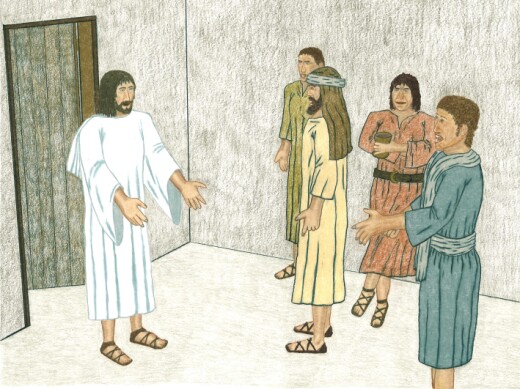
✦ Three primary points suggesting Jesus appeared live after the crucifixion:
- The event is documented in two independent sources: the New Testament and The Antiquities of the
Jews by Flavius Josephus. Israeli scholar Shlomo Pines (Professor at the Hebrew
University in Jerusalem) discovered a 10th century CE Arabic version of the Testimonium
Flavianum:
At this time there was a wise man who was called Jesus. His conduct was good and
was known to be virtuous. And many people from among the Jews and the other nations became his disciples. Pilate condemned him to
be crucified and to die. But those who had become his disciples did not abandon his discipleship. They reported that he had appeared
to them three days after his crucifixion, and that he was alive; accordingly he was thought to be the Christ [Messiah], concerning
whom the prophets have recounted wonders.
- The event is likely the primary reason Christianity persisted. If Jesus had died upon crucifixion, the movement
probably would have died with him.
- The documented story of Jesus’ post-appearance after the crucifixion in Luke 24:36-43 is realistic, granting
it credibility:
As they were saying this, Jesus himself stood among them. But they were startled and
frightened, and supposed that they saw a spirit. And he said to them, “Why are you troubled, and why do questionings rise in
your hearts? See my hands and my feet, that it is I myself; handle me, and see; for a spirit has not flesh and bones as you see
that I have.” And while they still disbelieved for joy, and wondered, he said to them, “Have you anything here to eat?” They gave
him a piece of broiled fish, and he took it and ate before them.
✦ There is no mention of any type of crucifixion wounds. Jesus asks his disciples to “see” exposed parts of his body (i.e.,
parts not covered by clothing, like his hands and feet) and to physically handle other parts of his body to prove he is flesh and
blood, and not spirit. Jesus is doing this to calm their fears by proving he is not a ghost.
✦ The crucifixion described in the Canonical Gospels was not a standard Roman crucifixion,
likely did not use nails to attach Jesus to the cross, and was possibly survivable.
✦ The Gospel of John has a modified version of the post-appearance story called the “doubting
Thomas.” The Gospel of John was written
a few decades after the Synoptic Gospels. The story of the “doubting Thomas” expands on the post-appearance story in Luke and
is the first time the concept of crucifixion wounds is mentioned in written text.
|
|

