|
|
John the Baptist
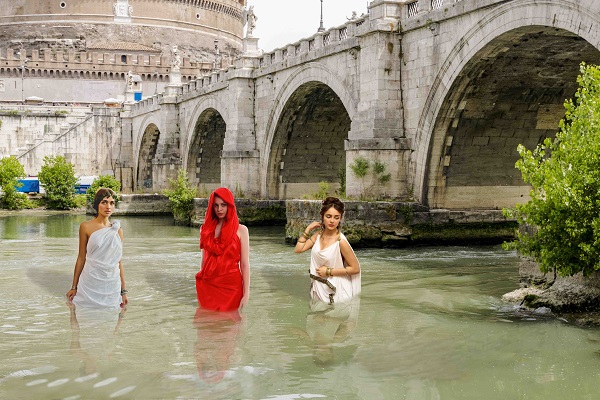
✦ Prior to Christian baptism the Romans had a spiritual cleansing ritual in a river. The Roman historian, Livy,
wrote in The Early History of Rome, I.45 (c. 20 BCE):
Surely you do not mean to sacrifice to Diana without first performing the act of
purification? You must bathe yourself, before the ceremony, in a living stream. Down there in the valley the Tiber [River]
flows.
✦ John the Baptist is documented as having baptized men from two professions; tax
collectors
and soldiers (remarkably syncing with
two primary goals of Roman occupation).
✦ When a tax collector asks what he must do to be righteous:
- Most people probably expected John to say, “Stop collecting money for the Roman government. Do not burden the
people beyond their tithes to God and his Temple.”
- But John publicly proclaimed, “Collect no more than is appointed you.”
- This implies that the appointed amount is legitimate and proper.
✦ When a soldier asks what he must do to be righteous:
- Most people probably expected John to say, “Do not serve the Roman army. Provide service to God and his
chosen people. Israel is the land God has promised to his people. Do the will of God and throw off the bonds of Roman occupation.”
- But John publicly proclaimed, “Rob no one by violence or by false accusation, and be content with your wages.”
- Having soldiers be content with their wages has obvious advantages to Rome.
- The spoils of war were meant for Roman soldiers and not for their foreign counterparts.
✦ John publicly instructed two infamous occupations in ways conducive to Roman rule.
✦ In the Gospel narratives a common theme between John the Baptist and Jesus included a positive light towards paying taxes
to Rome. Tax collectors were noted as followers of John the Baptist (Matthew 21:32, Luke 7:29) and of Jesus (Luke 15:1).
|
|

